
Effective Workplace Communication: A Practical Guide for Modern Teams
Most workplace problems do not start with bad strategy or weak skills. They start with someone misunderstanding a message, missing a hint, or staying quiet when they should have spoken up. Effective workplace communication sounds simple, yet it remains one of the hardest things to get right, even in well-run companies.
If your team feels disconnected, your meetings drag on, or your emails get ignored, the issue is usually communication, not effort. The good news? Better conversations are a learned skill, not a personality trait.
This guide breaks down what strong communication at work really looks like, the common problems holding teams back, and the simple habits that make a real difference. No jargon, no fluff, just clear advice you can put to use today.
What Effective Workplace Communication Really Means
Communication at work goes far beyond sending emails or joining Zoom calls. It means making sure every message, whether spoken, written, or non-verbal, reaches the right person and gets understood the way it was intended.
Strong communication has three simple parts. First, the message itself is clear. Second, the listener actually hears and understands it. Third, both sides feel comfortable asking questions or pushing back if something feels off.
When all three pieces work together, projects move faster, mistakes drop, and people stop second-guessing each other. When even one breaks down, you get confusion, missed deadlines, and quiet frustration.
Many teams confuse “more communication” with “better communication.” Sending five Slack messages a minute does not help anyone. Quality always beats quantity. A short, well-timed update often does more than a long, poorly written email.
Active listening also plays a bigger role than most people realize. Real listening means giving someone your full attention, not waiting for your turn to talk. It builds trust quickly, especially in remote and hybrid teams where face-to-face cues are limited.
Why Communication at Work Really Matters
Poor communication is expensive. Gallup’s 2024 meta-analysis of over 183,000 teams found that top-quartile engaged teams were 18% more productive in sales and 23% more profitable than bottom-quartile teams. Communication is one piece of that engagement gap — Gallup’s research consistently finds that the most engaged employees have two-way conversations with their manager, not one-way updates.
The cost shows up everywhere. Missed deadlines stack up. Customers receive mixed messages from different departments. Top performers quietly start job hunting because they feel unheard. New hires take longer to settle in. None of these issues feel like communication problems on the surface, but they almost always are.
Strong communication also shapes company culture. People feel valued when their voices count and ignored when they don’t. Over time, that single difference decides whether your best people stay or leave.
Mental health matters here too. Employees who feel safe speaking openly at work report lower stress and higher job satisfaction. Psychologists call this “psychological safety,” a concept made popular through Harvard professor Amy Edmondson’s research. Teams who have it perform better on almost every measure.
In healthcare, finance, and other high-stakes fields, the impact runs even further. A misread chart or an unclear handoff can put lives, or millions of dollars, at risk. The Joint Commission has reported for years that communication failures sit behind a large share of hospital errors, which is why “closed-loop communication” became standard practice in operating rooms and emergency departments.
Whether you run a five-person startup or a 5,000-person enterprise, the rule stays the same. Better conversations build better outcomes. And the inverse is just as true: weak communication quietly drains money, time, and morale long before anyone names it as the cause.
Common Communication Problems in Modern Workplaces
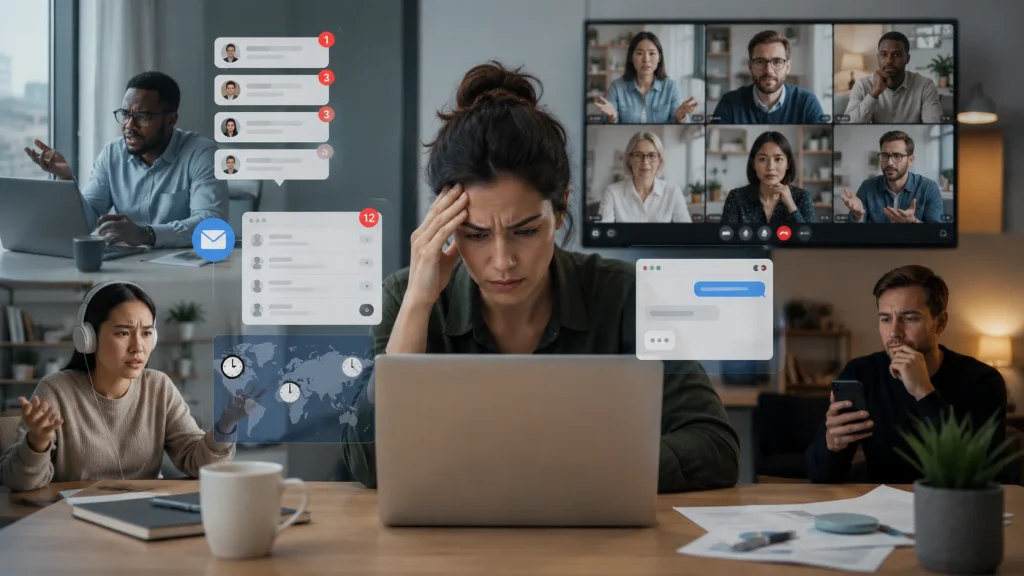
Several patterns show up again and again, no matter the industry.
Information overload
Slack pings, email chains, and back-to-back meetings leave people drained before lunch. When everything feels urgent, nothing actually gets read.
Unclear expectations
Managers assume their team “just knows” what to do. Employees assume the boss will say something if there’s a problem. Neither side speaks up, and small issues grow into big ones.
Remote and hybrid gaps
Working across time zones and screens makes nonverbal cues vanish. A short message can sound rude when it was just rushed. Without context, tone gets misread constantly.
Cultural and language differences
Global teams bring fresh ideas, but they also bring different communication norms. What feels direct in one country feels rude in another. What feels polite in one culture feels evasive in another.
Fear of speaking up
Without psychological safety, teams stay silent during meetings, then complain in side chats afterward. Honest feedback dies before it ever reaches the people who need to hear it.
Generational differences
Baby Boomers may prefer phone calls. Gen Z often skips email entirely in favor of chat apps and short videos. Bridging these gaps takes patience, not judgment.
Spotting which of these patterns affect your team is half the battle. The rest is fixing them, one habit at a time.
How to Improve Communication at Work

Real change does not require a massive overhaul. Small, consistent shifts make the biggest difference.
Start with the message, not the medium
Before sending anything, ask yourself what you actually want the other person to know, feel, or do. Then pick the right channel. Quick update? Use chat. Sensitive topic? Schedule a call. Detailed plan? Share a document.
Use plain language
Simple words beat fancy ones every time. Skip acronyms unless everyone knows them. If your reader needs Google to understand your sentence, rewrite it.
Lead with the point
Bury the lead and you lose your reader. State the main message first, then add context. This rule works for emails, presentations, and meetings alike.
Listen with your whole attention
Close the laptop. Mute your phone. Look at the person speaking, on screen or in the room. Repeat back what you heard before responding. This single habit separates good managers from great ones.
Ask better questions
Instead of “Any questions?” (which usually gets silence), try “What part of this still feels unclear?” or “What would you do differently?” Open questions get real answers.
Schedule regular one-on-ones
A 30-minute weekly chat with each direct report catches problems early and builds trust over time. Skip them and surprises pile up.
Give feedback often, not just at review time
Quick, specific, kind feedback in the moment helps people grow. Annual review-day surprises hurt morale and rarely change behavior.
Run shorter meetings
Most 60-minute meetings could be 25. Set an agenda, stick to it, and end early when you can. Your team will thank you.
Tools That Support Better Team Conversations
Software cannot fix bad communication, but the right setup makes good communication easier.
Microsoft Teams, Slack, and Google Chat give teams quick, organized conversations split out across topics or projects. Use channels well and your inbox finally calms down.
Zoom and Google Meet keep face-to-face contact alive across distances. Turn cameras on for important talks; tone and expression matter more than people think.
Asana, Trello, and Notion make project status visible to everyone, cutting down on “any update?” pings and side messages.
Loom lets you record short videos instead of writing long emails, which works especially well for explaining complex ideas without a meeting.
Survey tools like Officevibe, CultureAmp, or even Google Forms help leaders hear honest feedback, especially from quieter team members who rarely speak up in meetings.
The trick is not to use every tool. Pick a small, clear stack. Train everyone on how (and when) to use each one. A simple system used well beats a fancy system used badly every time.
Building a Culture of Open Communication
Tools and tactics matter, but culture matters more. Even the best meeting habits will fail in a workplace where people fear being honest.
Open communication starts at the top. When leaders admit mistakes, ask for feedback, and act on it, employees notice. Behavior at the top spreads quickly down the chain.
Recognize people who speak up, especially when they raise hard truths. If someone flags a problem and gets shut down, the rest of the team learns to stay quiet. If they get thanked, others find the courage to speak too.
Create safe channels for different kinds of voices. Some people share best in meetings; others prefer writing or one-on-one chats. Anonymous feedback tools, skip-level meetings, and small group lunches give introverts and quieter team members a real way in.
According to a SHRM-cited survey, only 52% of U.S. employees feel their organization communicates effectively — meaning nearly half don’t. That gap shows up directly in retention: companies rated highly by employees for open, effective management saw 48% of employees still on the job after three years, compared to just 32% at companies with low management scores.
Watch how conflict gets handled too. Healthy teams disagree out loud and resolve it respectfully. Unhealthy teams either avoid conflict entirely or let it explode in side conversations. The middle path, calm and direct, is the one to aim for. Teach managers to stay curious during disagreements rather than defensive, and most conflicts shrink before they grow.
Training also pays off, especially because most managers never get any in the first place. The Center for Creative Leadership has found that nearly 60% of first-time managers move into leadership without any formal training. Even a few hours of practice on giving feedback, running meetings, or handling tough conversations can close that gap before it costs a team its best people.
Final Thoughts
Effective workplace communication is not about saying more. It is about saying the right thing, in the right way, to the right person, at the right time. That mix takes practice, but every small improvement compounds.
Start with one habit this week. Maybe it’s asking a sharper question in your next meeting. Maybe it’s replacing a long email with a five-minute call. Maybe it’s finally giving the feedback you have been putting off.
Your team does not need a perfect communicator. They need a willing one.
If you want to keep building these skills, check out our guide to [barriers to communication] for more practical tips. Better conversations start with one person choosing to listen, speak clearly, and stay open. Let that person be you.
Frequently Asked Questions
What does effective workplace communication look like in practice?
It looks like clear messages, active listening, regular feedback, and a culture where people feel safe speaking up. It also includes choosing the right channel for each conversation, whether that’s email, chat, video, or face-to-face.
How can I improve communication on a remote team?
Set clear expectations for response times and channels. Use video for important talks, written updates for routine ones, and over-communicate context to make up for missing nonverbal cues. Regular one-on-ones matter even more for remote and hybrid teams.
What are the biggest barriers to effective communication at work?
Information overload, unclear expectations, fear of speaking up, cultural and language differences, and overuse of jargon top the list. Each one shows up differently, but all of them respond to the same fix: more clarity and more listening.
How often should managers communicate with their teams?
A weekly 30-minute one-on-one with each direct report works for most teams, plus a short team meeting and ongoing chat updates. Daily check-ins suit fast-moving projects, while monthly cadences work for steady, independent roles.
Can communication training actually help?
Yes, especially when it focuses on real workplace skills like giving feedback, running meetings, and handling tough conversations. Targeted coaching consistently improves team performance, manager confidence, and employee retention across industries.